
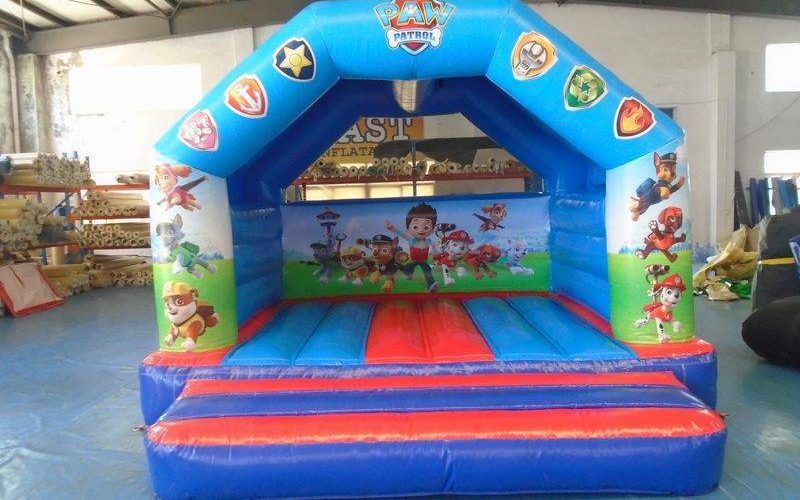
Setting bouncy castle hire prices means accounting for more than the equipment itself. Every booking involves delivery, setup, collection, cleaning and a share of your ongoing business costs.
Whether you hire out a single castle or offer a complete party package, your price needs to cover the work involved and leave a worthwhile return. This guide explains how to calculate your costs, compare local offers and review your prices against completed bookings.
Define What Each Hire Price Includes
Before setting a price, decide exactly what the customer is buying. They should be able to understand the offer without contacting you to clarify every detail.
Name the equipment, state the hire duration and explain how delivery, setup and collection work. If delivery is included only within a particular area, make that clear.
For a single castle, identify the model and the agreed hire period. For a package, list each item included. Optional extras should have separate prices, and customers should know which venue details you need before confirming suitability.
Avoid vague descriptions such as “full party package” unless you explain what that means. Clear inclusions help customers compare options and reduce misunderstandings later.
Count the Full Delivery and Collection Cost
Delivery costs extend beyond the fuel used to reach the customer.
If you deliver in the morning and collect in the evening, include both return journeys from your base. Account for driving time, vehicle running costs, parking and any additional access arrangements.
Distance alone does not tell you how much a booking will cost to fulfil. A nearby hall with steps and a long carrying route may take more work than a venue farther away with parking beside the entrance.
Ask about access when quoting. Find out whether there are narrow doorways, stairs, parking restrictions or fixed collection deadlines.
Where several bookings share a route, the travel cost per order may fall. Treat that as a saving when it actually occurs rather than assuming every booking will fit neatly into your schedule.
Include Your Own Working Time
Labour is easy to underestimate because customers mainly see the equipment being set up. The full booking also involves preparing and loading the order, travelling, handing it over, collecting it, unloading and cleaning.
Count your own time even if you do not pay yourself an hourly wage for each job. Otherwise, a booking can appear profitable simply because your work has been treated as free.
Use actual times from previous hires where possible. If adding soft play regularly creates another hour of handling and cleaning, reflect that in the price.
Larger or heavier equipment may need additional staff. Calculate the labour needed to deliver it consistently, including the access conditions you are willing to accept.
Allow for Equipment Wear and Business Overheads
Each booking should contribute towards maintaining and eventually replacing the equipment.
For pricing purposes, you can estimate a replacement allowance by spreading the purchase cost, less any expected resale value, across a realistic number of hires. Review the estimate as you collect usage and maintenance records. It is a budgeting method, not a prediction of the equipment’s safe working life.
You also need to cover ongoing business expenses such as storage, insurance, administration, website costs and marketing.
A starting point is to divide projected annual overheads by your expected number of completed bookings. For example, £6,000 in overheads spread across 200 bookings requires an average contribution of £30 per booking.
Use a realistic booking forecast. If you calculate prices around an unusually busy year, quieter periods may leave you short. More demanding bookings may also need a larger overhead allocation than straightforward local hires.
Work Through a Simple Pricing Example
Consider an illustrative indoor party package with £24 for delivery and collection, £48 for labour, £8 for cleaning and consumables, £15 towards equipment wear, and £25 in allocated overheads.
The total estimated cost is £120. At a selling price of £160, the booking leaves £40 above those estimated costs—a margin of 25% on the selling price.
These figures are an example, not a suggested market price. Your equipment, travel distances and working arrangements will determine your own costs. The same calculation can be used for a single bouncy castle.
Be careful with percentage calculations. Adding 25% to a £120 cost produces a £150 selling price, which gives a 20% margin. To achieve a 25% margin, divide £120 by 0.75, giving £160.
Keep revenue and costs on a consistent tax basis so your calculation does not overstate what remains from the booking.
Compare Equivalent Local Hire Offers
Checking local prices helps you understand the alternatives customers are considering. Compare the complete service rather than the headline figure.
Look at the equipment, dimensions, hire period, delivery coverage and included services. A small castle hired for a few hours is different from a slide combo supplied for a full day.
For a business serving Birmingham, delivery conditions can vary considerably between addresses. Check whether another operator’s advertised price applies to the same area and similar access arrangements.
If your calculated price is much higher than comparable offers, investigate the reason. You may be including extras customers do not value, covering too wide a delivery area or spending more time handling equipment than expected.
Local prices provide context. Your own costs determine whether matching them is worthwhile.
Set Clear Delivery Charges
A straightforward delivery policy makes quoting more consistent and helps customers understand the total price.
You could include delivery within a defined local area and charge separately beyond it. Alternatively, use delivery zones based on postcodes.
Base the charges on the complete journey and working time. Avoid setting a small additional fee for distant addresses without checking what delivery and collection will actually cost.
Explain any access-related charges before confirming the booking. Customers should know the payable total once they have supplied the information you need.
If a booking requires unusual arrangements, such as an additional collection trip or restricted unloading times, provide a tailored quote.
Base Package Savings on Real Efficiencies
A package discount is easier to sustain when supplying the equipment together saves you money.
Two items delivered to the same venue may share travel and administration costs. Those savings can support a lower combined price, provided the additional setup and cleaning work is still covered.
Suppose two items cost £190 when booked separately. A £175 package could make sense if the combined booking reduces fulfilment costs enough to support the £15 saving. Check the figures before advertising it.
If there is little operational saving, you can still offer a package for convenience. Customers may appreciate a suitable equipment combination and one straightforward booking without needing a large discount.
Keep the package options manageable. A few clearly described combinations are easier to compare and schedule than a long list of changing inclusions.
Price Extras and Extended Hire Separately
Optional additions should cover the extra work they create.
An item that fits easily into the vehicle and needs little handling may have a different cost from one requiring another member of staff or a separate trip.
For illustration, an extra with £12 in handling and cleaning costs and a £5 equipment allowance would leave only £3 if sold for £20, before any other related costs. A small addition to the customer’s order is not necessarily a worthwhile addition to your day.
Extended hire also needs checking. Keeping equipment at one venue longer may involve little additional handling, but it could prevent you from accepting another booking.
Publish clear prices for common extras and define when a tailored quote is needed. This keeps the booking process straightforward while allowing you to account for unusual requirements.
Review Your Prices Against Completed Bookings
Once you have completed several hires, compare your estimates with the actual work.
Record the selling price, travel time, labour, cleaning time and unexpected expenses. Note whether access problems or collection delays affected the job.
Review enquiry outcomes too. If customers frequently decline because of price, check whether they understand the inclusions and whether a simpler option would suit them. If the equipment does not fit their venues, lowering the price will not solve the problem.
Compare the amount remaining after costs with the working time required. A booking producing £50 over five hours may be less attractive than one producing £40 over two hours, depending on equipment availability and your wider schedule.
Use those findings to adjust your prices, equipment combinations or delivery terms. Apply changes clearly to new enquiries and keep existing bookings consistent with their agreed terms.
Set Prices You Can Explain and Repeat
Start with one inflatable or package you can deliver reliably. Define the inclusions, calculate the full cost and choose a selling price that makes the work worthwhile.
Then compare equivalent local offers and review the results of completed hires. This gives you a practical basis for pricing instead of relying on guesswork or copying another company’s rates.
Clear prices help customers choose. Accurate costs help you decide which bookings are worth accepting.