
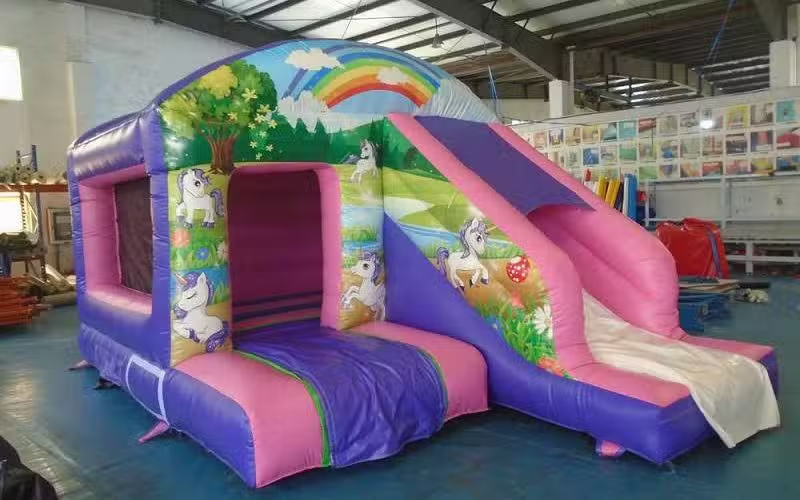
Buying a commercial bouncy castle is an important decision for any UK inflatable hire business. Whether you’re purchasing your first unit or expanding an existing collection, the right choice can provide years of reliable use, while a poor purchase may lead to unexpected repairs, higher running costs and disappointed customers.
With so many designs and suppliers available, it’s tempting to focus on appearance and price. However, two bouncy castles that look almost identical in photographs can differ considerably in materials, construction and overall quality.
So, what should you actually look for before buying a commercial bouncy castle?
Choose a Bouncy Castle That Suits Your Business
Before comparing manufacturers, think about the customers you want to attract.
A compact bouncy castle may be ideal for children’s birthday parties in residential gardens, while a larger combination inflatable with a slide could appeal to schools, community events and family entertainment businesses.
Consider where your equipment will be used most frequently. UK hire operators often work with gardens, village halls, leisure centres and outdoor event venues, each with different space and access requirements.
A popular design isn’t necessarily the right investment if it’s too large for your usual venues or difficult to transport.
For a new hire business, a versatile inflatable that suits a wide range of bookings may offer better value than an elaborate design with limited demand.
It’s also worth considering the age groups you intend to serve. Always check the manufacturer’s specified user limits and intended use rather than estimating suitability from appearance alone.
Commercial PVC Quality: What Really Matters?
The material used to manufacture a bouncy castle plays an important role in its durability.
Most commercial bouncy castles are made from PVC-coated fabric designed for repeated inflation, deflation, folding and transport.
Commercial manufacturers commonly use materials such as 0.55 mm PVC-coated fabric, although specifications vary between products.
However, thickness alone doesn’t determine quality.
The strength of the woven base fabric, coating adhesion, tear resistance and overall construction are also important.
When discussing materials with a supplier, ask about the PVC specification and whether additional reinforcement is used in areas exposed to frequent wear.
Be cautious of vague descriptions such as extra strong or premium commercial grade without supporting product information.
A reliable manufacturer should be able to explain what materials are used and why they are suitable for the inflatable’s intended purpose.
Look Beyond the Outside: Stitching and Reinforcement
A bouncy castle can look impressive from a distance, but some of the most important construction details are found around its seams and reinforced sections.
During normal use, inflatable structures experience repeated movement and loading. Areas such as jumping floors, entrance steps, climbing sections and supporting connections need appropriate construction.
Depending on the design, manufacturers may use double stitching, multiple rows of stitching or additional PVC reinforcement in high-stress areas.
However, more stitching doesn’t automatically mean better quality. The materials, seam design and manufacturing methods must work together.
If you’re purchasing directly from a factory, ask for close-up photographs of the stitching and reinforcement rather than relying entirely on catalogue images.
You can also ask how the manufacturer checks finished products before shipment.
These details can help you assess manufacturing quality before committing to a purchase.
Does the Design Work for Everyday Hire?
An attractive bouncy castle may generate enquiries, but practical features often determine how convenient it is to operate.
Think about how easily customers can enter and exit the inflatable, whether supervisors have suitable visibility and whether the design is appropriate for its intended users.
For example, a bouncy castle with a slide may offer more entertainment value, but it can also require additional installation space and more careful consideration of the surrounding area.
Transport is another important factor.
A large inflatable might fit comfortably in a customer’s garden but be difficult to move through a narrow side entrance or store in a small warehouse.
Before ordering, check the installed dimensions, packed dimensions and total weight.
For indoor hire, confirm the overall installed height and any clearance requirements. Don’t assume that a bouncy castle will fit simply because its advertised height is lower than the venue ceiling.
Choosing a practical design can make setup, collection and storage easier throughout the hire season.
Understanding UK Safety Requirements
Safety documentation should be a priority when purchasing commercial inflatable play equipment for use in the UK.
BS EN 14960-1 sets requirements for inflatable play equipment within its scope. Before buying, ask whether the specific model has been designed and assessed against the applicable requirements.
A supplier should be able to explain what documentation is available for the inflatable you’re considering.
This may include operating instructions, product identification, user limitations, blower specifications, anchoring requirements and inspection guidance.
It’s important to distinguish between documentation covering a particular product and general certificates that may relate to other models or materials.
UK operators should also familiarise themselves with relevant Health and Safety Executive guidance and the applicable inspection arrangements, including PIPA or ADiPs where appropriate.
Depending on the equipment and its intended use, an examination by a competent person may be required before it enters service.
Don’t rely on a supplier’s general statement that a product is suitable for the UK market. Ask for the relevant information before placing an order.
The Blower and Accessories Are Part of the Purchase
When comparing quotations, check exactly what comes with the bouncy castle.
Most commercial bouncy castles use a continuous-air blower that must operate throughout use.
The blower needs to provide suitable airflow and pressure for the inflatable’s design. Choosing one based solely on horsepower isn’t sufficient.
For UK use, electrical equipment should be suitable for the nominal 230V, 50Hz mains supply and the intended operating environment.
Ask the supplier which blower is specified and whether it is included in the quoted price.
Other accessories may include anchoring equipment, suitable straps, a storage bag and repair materials.
Not every supplier includes the same items, so a lower product price may not represent a better overall deal.
It’s worth requesting a clear list of included accessories before making payment.
How to Choose a Reliable Bouncy Castle Manufacturer
Finding a dependable manufacturer is just as important as selecting the inflatable itself.
An experienced supplier should be able to answer practical questions about materials, construction, product dimensions and operating requirements.
If you’re buying directly from overseas, communication becomes particularly important. You may need to discuss custom colours, branding, blower specifications or documentation for the UK market.
Commercial inflatable manufacturers such as East Inflatables offer different bouncy castle designs and customisation options for hire businesses. However, whatever supplier you choose, the key is to assess the actual product specifications and support available for your order.
Look for a manufacturer willing to provide clear quotations, detailed product information and realistic production and delivery estimates.
Production photographs or videos can also be useful, particularly when ordering customised equipment.
Be cautious if a supplier avoids technical questions or cannot explain the specifications of the inflatable being offered.
Don’t Make Your Decision Based on Price Alone
A cheaper bouncy castle isn’t necessarily a better investment.
Two products may look similar but differ in PVC specifications, reinforcement, included accessories and after-sales support.
For a hire business, it’s worth considering how the inflatable will perform over repeated bookings rather than focusing only on the initial purchase price.
A well-suited commercial inflatable may be easier to maintain and more practical to operate over time.
However, a higher price doesn’t automatically guarantee better quality either.
The best approach is to compare the actual specifications, documentation and services included in each quotation.
If you’re considering several suppliers, ask them to quote for comparable designs and clearly identify any differences.
This makes it easier to judge whether a price difference reflects meaningful product features or simply different sales terms.
What About Warranty and After-Sales Support?
Even well-manufactured commercial inflatables require maintenance, and occasional repairs may be necessary after repeated use.
Before buying, ask what warranty the manufacturer provides and which components are covered.
Some suppliers offer separate warranty periods for the inflatable structure and the blower.
Clarify whether the warranty covers manufacturing defects, material problems and stitching, as well as any exclusions relating to misuse, accidental damage or normal wear.
If you’re importing directly from a manufacturer, find out how replacement materials and spare parts can be supplied.
A responsive supplier can be particularly valuable when you need assistance with a repair or replacement component during a busy hire season.
Warranty terms should be provided clearly in writing rather than discussed only during a sales conversation.
Buying from a UK Supplier or Directly from a Manufacturer?
Both purchasing routes have advantages.
A UK supplier may offer local stock, shorter delivery times and easier access to domestic support. This can be useful if you need equipment quickly or prefer dealing with a business based in Britain.
Buying directly from an overseas manufacturer may provide greater flexibility in design, dimensions and branding, particularly when ordering several inflatables.
However, international purchasing requires additional attention to shipping arrangements, import costs and delivery times.
Before comparing prices, check whether the quotation includes transport to a UK port or delivery to your address.
Depending on the agreed shipping terms, customs clearance, import VAT, applicable duties and local handling charges may be additional costs.
The most useful comparison is the total cost of receiving equipment that meets your requirements, not simply the factory price.
Before You Place Your Order
Once you’ve chosen a design and shortlisted a supplier, take time to review the final quotation.
Make sure the product dimensions, materials, colours, blower specification and included accessories are clearly documented.
Confirm what safety and operating information will be supplied, along with the production schedule, delivery arrangements and warranty terms.
If the inflatable is customised, review the final design carefully before production begins.
Keep copies of the agreed specifications and correspondence so there is a clear record of what has been ordered.
For a commercial hire business, these final checks can help avoid misunderstandings and unexpected expenses.
A Good Bouncy Castle Is a Long-Term Business Investment
The best commercial bouncy castle isn’t necessarily the biggest, cheapest or most colourful model available.
It’s the one that suits your customers, works with your usual venues and offers appropriate construction quality, safety information and practical support.
Taking time to compare materials, manufacturing details, blower compatibility and total purchase costs can help you make a more informed decision.
For UK hire operators, buying the right equipment from the beginning is an important part of building a reliable and sustainable inflatable hire business.