
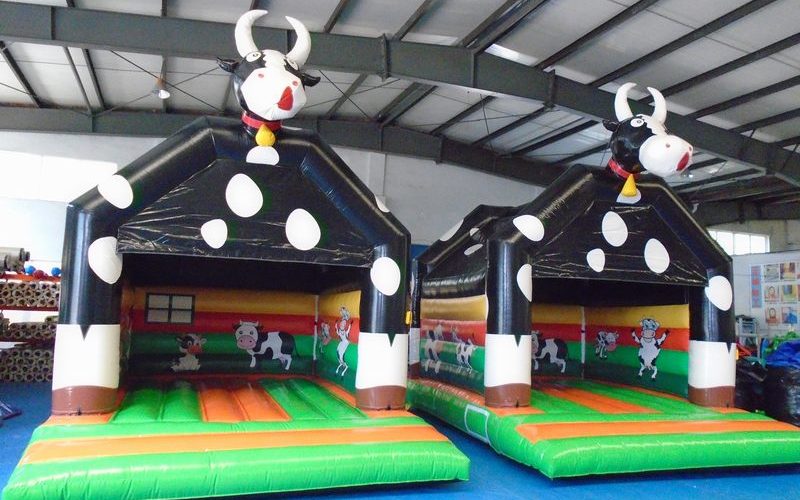
When buying a commercial bouncy castle, it is easy to focus on the design. Bright colours and a popular theme can help attract attention, but they are only part of the decision. The castle also needs to fit your customers’ venues, suit its intended users and be manageable between bookings.
For a hire business in Birmingham, the most useful purchase could be a compact castle for garden parties or a lower-height model for indoor halls. If you already have those bookings covered, a castle with a slide might give customers another reason to choose your business.
The best starting point is to decide what the new inflatable will add to your range.
Choose for the Bookings You Want
Before browsing designs, think about the enquiries you want to fulfil.
If you already operate a hire business, your booking history can help. Perhaps customers regularly ask for a castle that fits a smaller garden, or you have turned down hall bookings because your existing units are too tall. Those enquiries give you a clear direction for your next purchase.
You may also find that your most frequently hired castle is unavailable on busy weekends. In that case, buying another similar unit could be more useful than introducing a completely different attraction.
For a new business, start with your intended customers and venues. Children’s garden parties, indoor birthdays and adult events have different requirements. Speaking to local venues about space and access can help narrow the choice before you spend money.
| Product type | When it may suit your range | What deserves particular attention |
|---|---|---|
| Standard bouncy castle | Parties where bouncing is the main activity | Setup space and intended users |
| Castle with a slide | Customers seeking both activities in one unit | Layout, overall footprint and handling |
| Lower-height castle | Indoor venues with limited ceiling clearance | Total height and overhead obstructions |
| Adult-use castle | Bookings that include adult participants | Confirmed suitability and user limits |
Compare individual models within each category. Their dimensions, weight and operating limits can vary considerably.
Make Sure It Fits the Venue—and the Journey There
A castle’s advertised dimensions do not tell you everything about where it can be installed. The blower, inflation tube, anchoring arrangements, entrance matting and required clearances also take up space.
Ask for the complete setup requirements and compare them with the locations you expect to serve. For indoor hire, use the available height beneath beams and lights rather than relying on a hall’s general ceiling-height figure.
Then consider how the unit will reach that space. Narrow gates, corridors and steps can make a delivery difficult even when the installation area is large enough.
Weight and packed dimensions matter here. A model that fits your vehicle may still be awkward to move into a customer’s garden. Think through loading, unloading and access with the people and handling equipment you have available.
It is worth assessing a shortlisted model against a few typical venues before ordering. This turns a set of product measurements into a more useful question: could your team realistically deliver and install it at the places your customers book?
Look Beyond the Product Photograph
A design image can show you the shape, colours and artwork. It cannot show how well the finished inflatable has been made.
Where available, request photographs or video of the completed model, including close-ups of seams, entrances, anchor attachments and areas exposed to frequent wear. Ask about the fabric specification and reinforcement, but avoid judging the whole product by material thickness alone.
Practical details are worth examining too. Accessible deflation openings can make packing easier, while matching repair material and replacement components may be useful later.
If you are ordering a design that has not been manufactured before, establish which drawings and specifications will be agreed before production. You should also understand how the completed unit will be checked against that agreement.
This is especially relevant for custom orders. When discussing a model with a manufacturer such as East Inflatables, explain the intended users, available setup space and any transport restrictions alongside your preferred design. Those details give the manufacturer a clearer brief than a reference picture alone.
Understand the User Limits and Documentation
The size of the bouncing area is not a reliable way to estimate capacity. Nor does a large castle automatically mean that adults can use it.
The model’s operating manual and label should clearly state its user limits. These may include maximum user height and different capacities according to user height. You will need that information when describing the castle on your website and deciding whether it suits a booking.
Documentation should be discussed before paying a deposit. For play inflatables covered by its guidance, the UK Health and Safety Executive advises an initial test to confirm compliance with BS EN 14960 and an annual inspection by a competent person. Operating instructions should also be supplied.
Clarify which model-specific records come with the purchase and which testing or inspection arrangements you need to make. The manual should explain the anchoring arrangements and specify the required blower.
A general certificate covering a product range should not be assumed to replace the records needed for the individual unit. If anything is unclear, discuss it with a competent inflatable inspector before ordering.
Consider the Work Between Hires
A new castle becomes part of your routine from its first booking. Along with delivery and collection, it needs cleaning, drying and storage.
For example, a larger unit might offer another activity for customers but take up more of the vehicle, require additional help to handle or need more drying space after a wet collection. Those are costs in time and capacity, even when they do not appear on the supplier’s quotation.
Consider how the purchase will fit a busy weekend. Can it travel alongside your other equipment? Can your team handle it safely? Do you have somewhere suitable to dry it according to the manufacturer’s instructions before packing it away?
These questions help you choose equipment you can manage consistently, rather than a product that works only when your schedule is quiet.
Compare the Complete Purchase
Once you have a shortlist, compare itemised quotations rather than headline prices.
Find out whether each package includes the specified blower, storage bag, repair kit and anchoring equipment. Identify any additional operating equipment you will need. For the blower, match the required output and electrical supply to the manual; horsepower alone does not establish suitability.
Include delivery, applicable import charges, testing arrangements and any necessary changes to transport or storage in your comparison. For an overseas order, get written confirmation of what the delivery quotation covers.
Warranty and repair support deserve attention as well. Read what is covered, how a claim is handled and who pays associated transport costs. Ask whether repair materials and replacement components will remain available after the warranty ends.
Before paying a deposit, keep the agreed dimensions, design, accessories, documentation and delivered price together in writing. Your final choice should have a clear role in the business: serving bookings you want to accept while fitting the practical work required to fulfil them.