
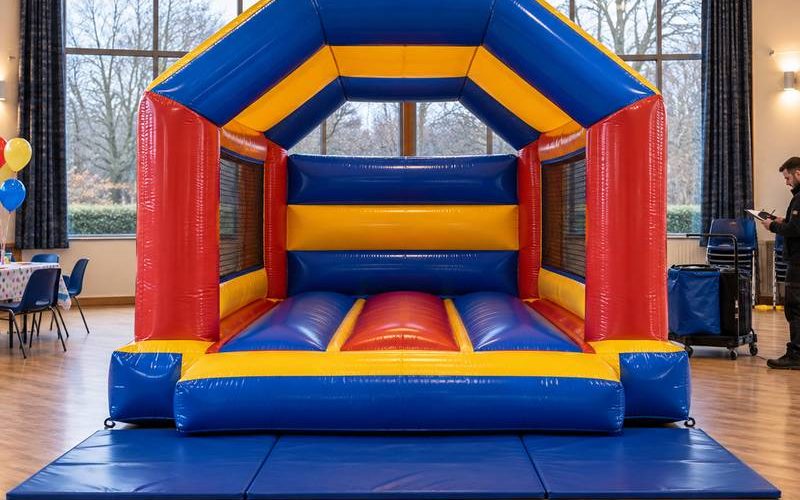
A quiet winter calendar can put pressure on a bouncy castle hire business. Storage, vehicles and equipment still cost money, even when fewer bookings are coming in.
Birthdays, school celebrations and community events continue throughout the year, but customers may need different equipment, venues and booking arrangements during colder months. Understanding those needs can help you find work that suits your stock and covers the cost of delivery.
Here are seven practical ways to attract off-season bookings, along with a simple plan for deciding which ideas work for your business.
1. Make Indoor Hire Easier to Book
Parents planning an indoor party often have one immediate question: will the bouncy castle fit inside their chosen hall?
Create an indoor hire category featuring suitable equipment from your existing range. Show both the inflatable’s dimensions and the full setup space required, including the blower, entrance area and manufacturer-specified clearances.
Use a short enquiry checklist to collect:
- Usable floor length and width
- Lowest ceiling height, including beams and hanging fixtures
- Entrance width and any steps or narrow corridors
- Available power supply
- Access times for setup and collection
- Confirmation that the venue permits inflatables
Ask about the usable area rather than the overall hall size. A stage, tables or fixed sports equipment may reduce the space available.
Keep a record of enquiries you cannot fulfil. If several customers need equipment shorter or narrower than your current stock, you have a specific purchasing question to investigate.
Before buying a low-height castle, check whether those enquiries would have become worthwhile bookings. Consider the requested dates, delivery distances and prices customers were prepared to pay. This gives you a better basis for investing than assuming any indoor inflatable will be busy.
2. Build Relationships with Suitable Local Venues
A small number of useful venue contacts can be more valuable than a long list of halls you have never visited.
Start within your normal delivery area. Ask venue managers whether they accept inflatables and whether you can visit to check the space and unloading arrangements.
Keep a practical record of:
- Equipment that could fit
- Parking and unloading positions
- Doorways, corridors and steps
- Setup and collection access hours
- Venue contacts and booking requirements
Pay particular attention to timing. A hall that allows only a short setup window may be difficult to fit into a busy delivery route, even if the equipment fits comfortably.
For businesses serving Birmingham, a guide to local halls can help customers plan indoor parties. Base it on venues you have genuinely checked, publish details with permission and ask customers to confirm current availability directly.
Agree with venue staff how referrals will work. Avoid describing a hall as a partner unless you have an established arrangement.
3. Create Packages That Solve a Specific Party Need
A useful package helps customers choose equipment that suits their children and their venue.
For example, a hypothetical younger children’s package could combine an age-appropriate small bouncy castle with soft play. A party for older children might suit a slide combo instead, depending on the equipment’s intended users and the space available.
Give each package a clear description covering:
- Included equipment
- Intended age group, based on product guidance
- Total setup space
- Hire duration
- Delivery, setup and collection charges
- Optional extras
Start with two or three combinations you can deliver reliably. Too many variations can make enquiries harder to manage and increase the chance of scheduling mistakes.
Price the complete job. Soft play may add cleaning time, vehicle space and extra trips between the vehicle and the hall. Include that work when deciding whether the package is worthwhile.
If one package receives enquiries but few bookings, ask what is stopping customers. The problem may be unclear dimensions, an unsuitable hire period or equipment they do not need. A discount will not resolve every objection.
4. Approach Schools and Community Organisers Before Their Plans Are Finalised
Schools, community groups and businesses may arrange events months in advance. Contacting them early gives you time to understand the event and prepare a relevant proposal.
Send a brief introduction with a few suitable options rather than your entire catalogue. Include clear photographs, dimensions and the information needed to request a quote.
Ask about participant ages, expected attendance, usable space, event duration, budget and supervision arrangements. Be ready to provide the documents requested by the organiser or venue.
Find out how the event will run. A school fair with participants arriving throughout the afternoon has different needs from a private party with a fixed guest list.
Quote for the full booking, including travel, setup, collection and any staffing you supply. Late collection or restricted vehicle access can increase the work involved.
Record when organisers expect to make their decision and follow up at that point. This keeps your contact relevant and helps you plan availability.
5. Learn from Previous Customers and Lost Enquiries
Past customers can provide repeat bookings, while unsuccessful enquiries can reveal what your business needs to improve.
Where you have permission to send marketing messages, share something relevant with previous customers. An autumn update might show indoor options or remind parents to check equipment availability before paying a hall deposit.
For enquiries that do not become bookings, record the main reason where the customer is willing to explain:
| Reason | What to review |
|---|---|
| Price was too high | Whether the quote clearly explains what is included and whether a simpler option would fit |
| Equipment would not fit | Product dimensions, setup requirements and demand for smaller equipment |
| Requested date was unavailable | Whether repeated demand could justify more capacity |
| Delivery was outside your area | Whether extending coverage would cover the extra travel and labour |
| Customer did not respond | How clearly and promptly you answered their questions |
Review the patterns rather than reacting to one lost booking. Several enquiries for the same unavailable date may indicate demand; one distant, low-budget enquiry may not justify changing your service area.
Ask completed customers for honest feedback too. Clearer collection times or better delivery updates may encourage repeat bookings without reducing your prices.
6. Use Photographs That Help Customers Choose
Real setup photographs can answer questions that product descriptions leave open.
Show a wide view of the inflatable inside a venue so customers can understand its scale. Add another image showing features relevant to their choice, such as the entrance, enclosed bounce area or slide.
Captions should explain which product is pictured and direct readers to its full dimensions and setup requirements. Make clear that suitability still depends on their venue.
Choose photographs that help customers compare options. A small castle in a hall and a larger slide combo in a different space can illustrate why equipment selection matters.
Use your own images where possible and obtain permission before publishing identifiable people or venue details.
Place the photographs on relevant product pages and articles, with a clear link to enquire about that equipment. Customers should be able to move from seeing a suitable setup to requesting availability in a few straightforward steps.
7. Fill Quiet Dates Without Losing Your Margin
Check where your calendar has gaps before introducing an offer. If Saturdays remain busy but weekdays are empty, a promotion for selected weekday dates may be more useful than a general discount.
You could test a package price, an included extra or a longer hire period where your schedule allows it. Calculate the cost of fulfilling the offer first.
Consider this simplified example:
| Item | Illustrative amount |
|---|---|
| Booking revenue | £100 |
| Delivery and collection costs | −£25 |
| Staffing costs | −£30 |
| Amount remaining before other costs | £45 |
The remaining £45 still needs to contribute towards cleaning, equipment wear, storage, insurance and other overheads. A £20 discount would leave £25 before those costs.
These figures are illustrative, not typical industry rates. Use your own costs and include payment fees or other booking expenses where applicable.
Also consider what the offer occupies in your schedule. A discounted booking with fixed delivery and collection times could prevent you from accepting a more worthwhile job.
Set a defined period for testing an offer. Record the additional bookings it generates, the time required and the amount remaining after direct costs. Continue it only if the results justify the work.
A Practical Plan for the Next Month
Week 1: Review your indoor options. Check product information, setup requirements and photographs. Look through recent enquiries for recurring space limitations.
Week 2: Check nearby venues. Contact a small number of halls and record access, usable space and booking arrangements.
Week 3: Test one clear offer. Promote a suitable package or selected quiet dates to a relevant audience. Keep the terms and price easy to understand.
Week 4: Review what happened. Compare enquiries, confirmed bookings, reasons for lost enquiries and the costs of each completed hire.
Measure more than the number of bookings. Look at what remains after direct costs and how much working time each job requires.
That review will help you decide whether to improve a package, build more venue contacts, adjust delivery coverage or investigate a new equipment purchase. The most useful off-season strategy is one you can deliver consistently and support with results from your own business.